A First Neighbourhood Walk, Built Around One Question
A first neighbourhood walk built around one question helps you notice local routines and record useful details without rushing to cover every street.
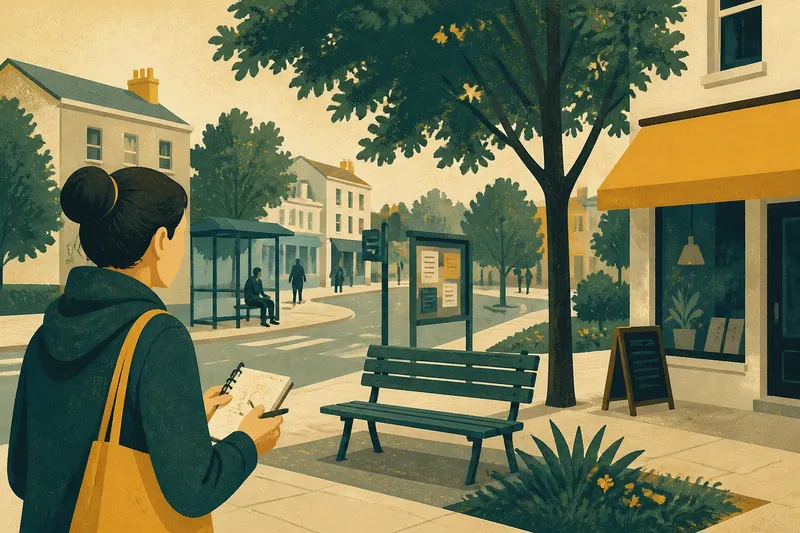
You have an hour free, a new set of streets outside, and no clear idea where to begin. For a first neighbourhood walk, choose one question before you leave: where do people pause, which routes feel busy at different times, or what marks the edge of a local shopping area? One question gives your walk a purpose without turning it into a hunt for the whole neighbourhood.
Which question suits your first walk?
Pick something you can answer by looking and listening from public places. A good question is narrow enough to keep in mind, but open enough to lead you along more than one street. Avoid questions that require guessing what residents think or why they behave a certain way.
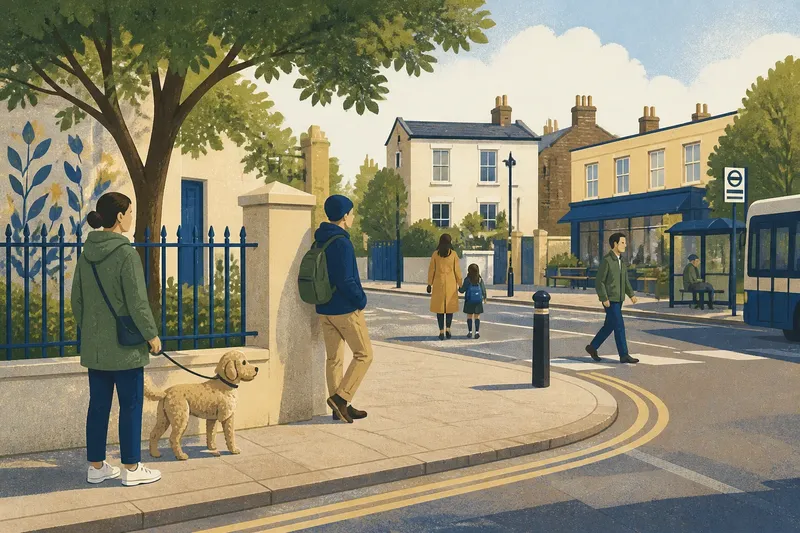
- If you want to understand the pace: ask where people pause. Notice benches, bus stops, doorways set back from the pavement, and places where someone waits while another person catches up.
- If you are learning the layout: ask how people move between useful places. Follow the route between a transport stop, a food shop and a public green, noting where the pavement or street pattern changes.
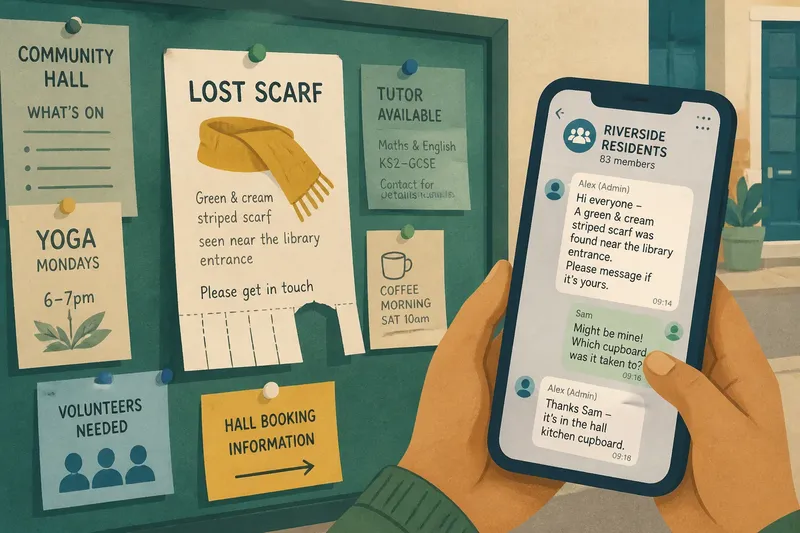
- If the area feels socially unfamiliar: ask what kinds of shared space are visible. Look for a library entrance, a community noticeboard, a square or a public seating area, without assuming who uses it or who belongs there.
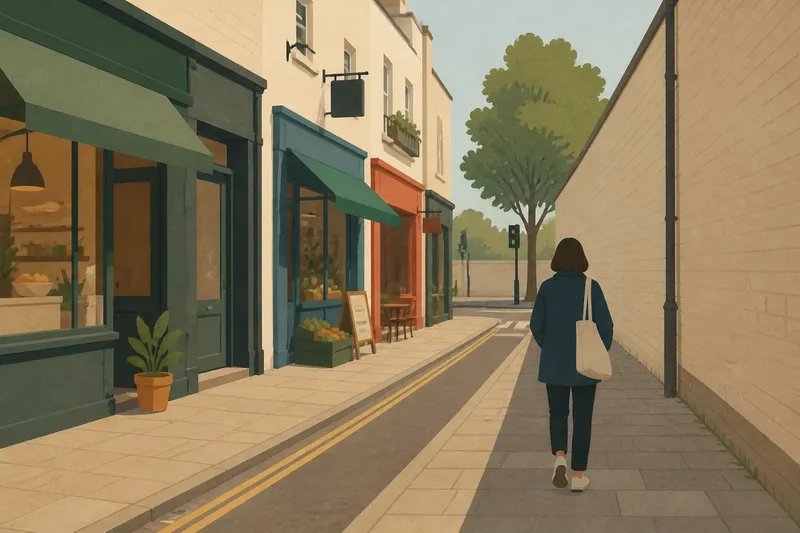
- If you are short on time or energy: ask what changes along one street. A change in paving, street trees, building entrances or the kinds of businesses can give you a focused route close to home.
Choose the question that matches what you need today. If you are new to the area and still finding your bearings, route connections are likely to be more useful than a detailed account of local customs. If you already know the practical routes, watching for pauses may reveal a different layer.
How should you choose a route?
Start at a place you can easily return to, such as your front door, a familiar bus stop or a public square. Pick a loop with a clear way back. You do not need to map every turn in advance; just identify one destination or crossing that will keep the walk anchored.
Let the question guide your turns. If you are looking for places where people pause, follow streets with seating or sheltered entrances rather than walking quickly past them. For a route question, use a natural connection between destinations and pay attention to where the direct path becomes less obvious.
Keep to public pavements and spaces open to visitors. Do not photograph people closely or enter a building to satisfy your curiosity. If a street feels uncomfortable, turn back or choose another route; curiosity is not a reason to ignore your own judgement.
What should you record?
Use a small notebook or the notes app on your phone. Record observations that another person could also see: “Two benches face the playground” is more useful than “Everyone seems friendly.” Separate what happened from what you think it might mean.
- Write down the street or nearby public landmark, so you can place the observation later.
- Note the time of day and broad conditions, such as rain or bright sun, if they may affect what you see.
- Describe the feature or action plainly: a queue, a cluster of seats, a gate left open or a path leading through a green.
- Record a question for next time rather than forcing an explanation.
- Stop when the walk has answered enough to be useful; a few clear notes beat a page of guesses.
A sketch can help when the question is about movement. Draw the pavement as a line and mark where people cross, wait or turn. Treat the page like a shopping list, not a diary: a few specific entries make it easier to see what you noticed.
What if the walk does not answer your question?
That is a useful result, too. A quiet street at one time does not tell you whether it is quiet throughout the day. Note what you saw, then decide whether the question needs a different route, a different time or a smaller scope.
Say you ask where people pause and find nobody lingering on the main road during a rainy afternoon. You note the weather and the bus shelter, then choose to revisit the nearby square when the weather is dry. The expected observable result is a more comparable view of that space, not proof of a fixed neighbourhood habit.
Keep interpretation modest. A closed gate may indicate a private space, a temporary closure or simply a time when access is restricted. Where access or local rules are unclear, follow posted signs and the instructions given by the place or its owner.
How can you make the next walk more useful?
Choose a follow-up only after looking over your notes. You might return at another time, trace a route one street farther, or ask a neutral question in a suitable public setting, such as where a local noticeboard is. Do not turn one observation into a claim about everyone who lives nearby.
If your first walk was mainly about movement, the next could focus on a shared space or a local custom you can observe without intruding. Keep the same simple record: place, visible detail, and an open question. That continuity helps you compare what you saw without pretending that one stroll explains the whole area.
Questions people ask before setting out?
How long should a first neighbourhood walk be?
Choose a length that leaves time to pause and return comfortably. A short loop is enough if it lets you follow one question without watching the clock or rushing past details.
Should I take photographs or write notes?
Writing is often better for recording context and keeping private moments private. Photograph public features, such as a sign or a path, only when doing so is appropriate and does not capture people unnecessarily.
Is it awkward to walk slowly and observe?
Walk at an ordinary pace and stop where stopping makes sense, such as beside a map, bench or public noticeboard. If a spot is busy or blocks the way, move on and make a note from somewhere less intrusive.
What is the best question for a first walk?
There is no single best question; it depends on what you still need to learn. For a first neighbourhood walk, “Where do people pause?” is a useful choice if you want to notice how public spaces invite waiting without assuming why anyone is there.
Before you leave, write your question at the top of a blank note and leave space beneath it for observations. That small prompt can keep the walk focused, while the unanswered details give you a sensible reason to return.